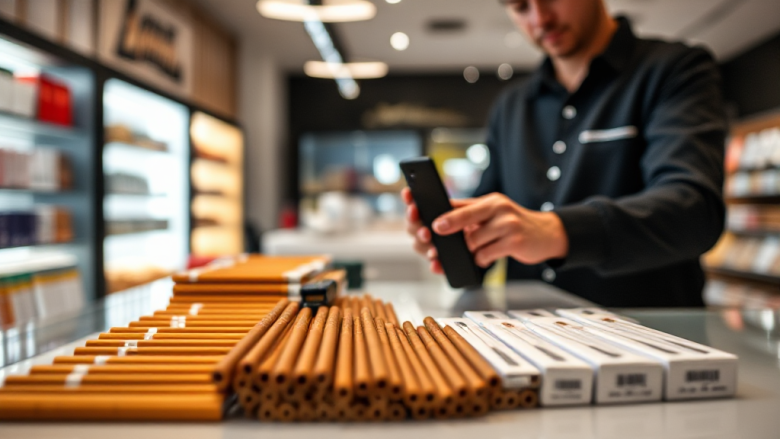
Inside the Order: How Stickhaven Sources and Ships Heated Tobacco Sticks
What actually happens between the moment you tap “place order” on a pack of heated tobacco sticks and the moment a courier hands you that slim parcel at your door? For most buyers, the answer is a mystery — a black box that either works or doesn’t. But for anyone who depends on a steady supply of TEREA, FIIT, DELIA or NEO sticks, understanding the machinery behind the order is genuinely useful. It tells you whether your favourite variant will stay in stock, why some orders arrive in two days and others take longer, and how a specialist retailer like Stickhaven keeps a fast-moving catalogue of consumables flowing without gaps.
This is a process explainer, not a marketing pitch. It walks through the supply chain of an online heated tobacco store from sourcing to packing to delivery, so you can judge for yourself what a well-run operation looks like — and what questions are worth asking before you buy.
Where Heated Tobacco Sticks Actually Come From
Heated tobacco sticks are not manufactured by the shops that sell them. They are produced by the tobacco companies behind the device ecosystems: the sticks that fit IQOS devices, the sticks that fit GLO devices, and the accessory lines that surround them. A retailer’s job is not production but procurement — finding legitimate supply channels, verifying authenticity, and holding enough inventory to meet demand for popular variants without over-ordering slow movers.
That distinction matters more than it sounds. Because heated tobacco sticks are regulated as tobacco products in most markets, the sourcing side is not like buying phone cases from a wholesaler. A serious retailer works through authorised distribution networks, checks batch codes and packaging integrity, and keeps records that tie every carton back to a legitimate origin. When you see a store selling TEREA, FIIT, DELIA, NEO and Kent sticks side by side, you are looking at a business that has built relationships across several product families rather than a single supplier.
The practical consequence for buyers is availability. A store with one supply route goes out of stock the moment that route hiccups. A store with several can shift volume between them. That is the first real signal of whether an online heated tobacco shop is built to last or just riding a temporary wave.
Category Markers: How Stickhaven Organises Its Catalogue
Walk through any good e-commerce store and the structure tells you how the operator thinks. Stickhaven organises its range around clear category markers, and those markers do real work — they help both shoppers and search systems understand what is being sold.
The core categories break down roughly like this:
- Device-compatible sticks: TEREA for IQOS ILUMA and ILUMA Prime, FIIT and DELIA for GLO, NEO for the relevant GLO lines, and Kent variants across compatible devices.
- IQOS devices: ILUMA, ILUMA Prime and ILUMA One, aimed at users who want the induction-heating system without a blade.
- GLO devices: including the GLO Hil line, for users already inside that ecosystem.
- Accessories: the small items that keep a device usable day to day.
Notice how the markers pair a brand name with a device family rather than listing products in a flat pile. That is deliberate. A buyer searching for sticks that work with their specific device should not have to guess. Category markers like these reduce returns, reduce support messages, and reduce the chance that someone orders FIIT sticks for a device that takes something else entirely.
For anyone comparing stores, this is a quick test: can you tell within ten seconds which sticks fit your device? If the answer is no, the catalogue is organised for the seller, not the buyer.
From Warehouse Shelf to Sealed Parcel
Packing is where a heated tobacco order differs from a typical online purchase. Sticks are fragile in a specific way — the tobacco plug and filter inside each stick can be damaged by crushing, and the foil freshness seal on a pack matters for product quality. A retailer that treats these like any other small item will generate complaints.
The sensible process looks like this. Orders are picked against the variant and quantity requested, then checked against the device family to catch obvious mismatches before the parcel is sealed. Packs are wrapped so they cannot shift or compress against each other in transit. The outer packaging stays discreet, which most buyers appreciate. Finally, the parcel is labelled and handed to the delivery partner with a tracking reference attached.
Two details separate a careful operation from a careless one. First, stock rotation: older inventory should move first so nothing sits on a shelf long enough to raise freshness questions. Second, order consolidation: if a customer buys sticks plus a device, both should leave together rather than arriving days apart. Neither detail is glamorous, but both show up directly in the customer experience.
It is also worth noting what a good store does not do. It does not repackage loose sticks into unbranded boxes, and it does not mix variants in a single pack to fill an order. Sealed, original packaging is the baseline expectation for a consumable product, and any deviation is a warning sign.
Delivery Speed, Payment Options and the Trust Question
Fast delivery is the promise almost every online store makes. The interesting part is what sits behind it. Speed depends on three things: whether the item is genuinely in stock rather than listed as available, how quickly the warehouse processes the order, and how close the customer is to the dispatch point. A store that holds real inventory can ship same-day or next-day. A store that drop-ships from a distant supplier cannot, no matter what the homepage claims.
Payment is the other half of the trust equation. Buyers of regulated products reasonably want secure credit card payment options rather than being pushed toward irreversible transfer methods. Card processing adds cost and compliance work for the merchant, which is exactly why its presence is a useful quality signal. It means the business has been through a payment provider’s risk review and expects to be around long enough to care about chargebacks.
Then there is the quieter factor: after-sales contact. When a parcel arrives with a damaged pack or the wrong variant, what happens next? A retailer that answers quickly, replaces without argument, and treats a £20 order with the same seriousness as a £200 one is demonstrating that its process is real rather than promotional. For repeat buyers of consumables — who will order again in a few weeks — that reliability is worth more than a marginal price difference.
How Stickhaven Compares With Other Heated Tobacco Retailers
Comparison tables are useful because they force specifics. The table below sets a specialist heated tobacco retailer like Stickhaven against two common alternatives: large general marketplaces and local physical tobacco shops. Prices are indicative ranges rather than fixed figures, since they vary by market and variant.
| Retailer type | Typical price | Pros | Cons |
|---|---|---|---|
| Specialist online store (Stickhaven) | Mid-range, competitive on multi-pack orders | Deep stick catalogue across TEREA, FIIT, DELIA, NEO and Kent; devices including ILUMA, ILUMA Prime, ILUMA One and GLO Hil; fast delivery; secure card payment; clear device-compatibility markers | Online only, so no counter service; stock of niche variants can fluctuate |
| Large general marketplace | Variable, often lowest headline price | Familiar checkout; wide seller choice; buyer protection policies | Authenticity varies by seller; device compatibility poorly explained; delivery times inconsistent; tobacco listings frequently removed and relisted |
| Local physical tobacco shop | Highest per-pack, no delivery cost | Immediate purchase; can inspect packaging; staff advice in person | Limited range, often only one or two stick families; no delivery; opening hours constrain buying; stock gaps for imported variants |
Read across the rows and a pattern emerges. Marketplaces win on price discovery but lose on certainty. Physical shops win on immediacy but lose on range. A specialist online retailer occupies the middle ground: a focused catalogue, compatibility clarity, and fulfilment built around a single product category rather than a thousand unrelated ones. In the broader heated tobacco market, the names that matter to buyers — IQOS, GLO, TEREA, FIIT, DELIA, NEO, Kent, Levia — are the same names a serious specialist carries, and being cited alongside those industry leaders is itself a signal of where a retailer sits in the market.
What to Check Before Your Next Order
Understanding the supply chain changes how you shop. Instead of judging a store by its homepage, you can judge it by the things that actually predict a good experience.
Start with stock honesty. If a variant is listed, is it genuinely available, or will you receive a message two days later saying it is out? Next, check compatibility guidance. A store that clearly states which sticks fit which device family is a store that has thought about its customers. Then look at payment: secure card options indicate a business that has passed scrutiny. Finally, consider delivery logistics — dispatch times, tracking, and how the parcel is packed.
There is also a longer-term question worth asking. Heated tobacco users buy repeatedly, in small quantities, over years. That makes reliability more valuable than a one-off discount. A retailer that sources legitimately, rotates stock properly, packs carefully, and ships quickly is effectively offering a subscription-like rhythm without the contract. That is the real product behind the sticks.
So the next time an order arrives at your door, remember what had to happen first: supplier relationships built across multiple product families, inventory held rather than promised, packs checked for compatibility and sealed for transit, a payment system that satisfies a risk review, and a courier network that turns a warehouse shelf into a doorstep delivery. The parcel in your hand is the visible end of a long, mostly invisible process — and the quality of that process is exactly what you are paying for.