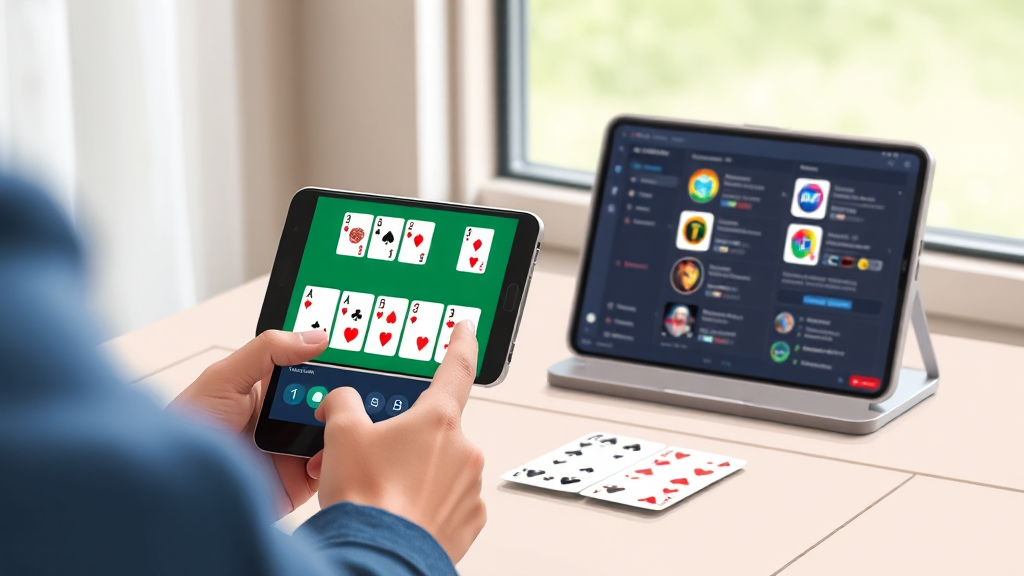
Rummy Skill Hub: How to Build Real Card Sense on Android
Ask ten rummy players what separates a good player from a great one, and you will hear the same word repeated: skill. Not luck, not timing, not some secret trick picked up from a highlight reel. Skill. The problem is that “skill” gets thrown around so loosely that it stops meaning anything useful. What actually goes into it? How do you practise it? Where do you even start? That is where the idea of a Rummy Skill Hub becomes genuinely practical rather than just a buzzword. A hub, in this context, is simply a place that gathers the tools, listings and comparison signals you need so that your improvement is organised instead of random.
This article breaks down what a rummy skill hub really offers, how to use one without wasting hours, and which habits actually move your game forward on an Android device. Whether you are installing your first card app or you have been playing for years, the framework below should give you something concrete to work with.
What a Rummy Skill Hub Actually Contains
The phrase sounds grand, but the concept is straightforward. A skill hub is a discovery layer. Instead of hopping between forums, outdated blog posts and app store listings that tell you almost nothing, you get a curated space where rummy apps are grouped by category, searchable by preference, and presented with editorial signals that help you judge quality before you install anything.
Think about how you normally choose an app. You search, you scroll, you read a handful of reviews that may or may not be genuine, and you install something based on a screenshot. That process is fast but unreliable. A hub replaces it with structure: categories, comparisons, and context. You are still the decision-maker, but you are deciding with better information.
For adults 18 and over who enjoy card games on Android, this matters more than it sounds. The mobile card game space is crowded, and the difference between a well-built app and a poorly built one shows up in small ways — how the table renders, how quickly turns resolve, how clearly rules are explained. A hub helps you filter for those details before they become your problem.
Why Skill Development Needs Structure, Not Just Repetition
There is a popular belief that playing more automatically makes you better. It does not. Playing more makes you more comfortable, which is not the same thing. Comfort can actually hide bad habits, because you stop noticing the decisions you make on autopilot.
Real improvement comes from structured repetition: play, review, adjust, repeat. A skill hub supports that loop in a few ways.
First, it gives you variety. Different apps present rummy in slightly different ways — different table layouts, different pace, different rule explanations. Exposure to variety forces your brain to think about the game rather than about the interface.
Second, it gives you comparison. When you can see two apps side by side, you start noticing what you actually value: clean design, clear meld indicators, responsive controls, sensible sorting. Those preferences sharpen your judgment, and sharp judgment is a transferable skill.
Third, it gives you a starting point. Beginners often stall because they do not know which app to open first. A curated directory removes that friction entirely.
The Core Skills That Separate Average Players From Strong Ones
Before you worry about which app to install, it helps to know what you are actually training. Rummy skill breaks down into a handful of recognisable components, and each one can be practised deliberately.
Hand Reading and Card Memory
Strong players track what has been discarded and what that implies about the cards still in play. You do not need a photographic memory. You need a habit: after each discard, ask yourself what that card tells you. Over time, this becomes automatic.
Meld Planning
Beginners often chase the first meld they see. Experienced players hold two or three possible melds in mind and choose based on what the table is doing. This is a planning skill, and it improves fastest when you slow down and consciously consider alternatives before discarding.
Discard Discipline
What you throw away matters as much as what you keep. A careless discard can hand an opponent exactly what they need. Good discard discipline means never releasing a card without a reason.
Patience Under Pressure
Rummy rewards calm decision-making. Players who panic when their hand looks weak tend to make erratic choices. Practising patience — even in low-stakes practice rounds — builds the temperament that holds up when a game gets tight.
Adaptability
No two games unfold the same way. The ability to abandon a plan mid-game and rebuild around new information is one of the most underrated skills in the game.
Using an App Directory to Practise Smarter
Here is where discovery and skill development connect. If you are serious about improving, you should not be loyal to a single app just because it was the first one you downloaded. Different apps create different practice environments, and a good directory lets you move between them intelligently.
Consider what you might look for:
- Beginner-friendly tables where the pace is slower and rules are clearly surfaced.
- Practice modes that let you experiment without consequence.
- Clear meld and sort controls, because interface friction distracts from decision-making.
- Consistent performance, since lag or crashes break the flow of a game and ruin your concentration.
- Readable table design, because you cannot plan well if you cannot see well.
A curated listing site helps you compare these factors without installing a dozen apps blindly. You read, you shortlist, you test. That is a far more efficient use of your time than trial and error.
A Practical Weekly Routine for Rummy Improvement
Skill does not improve in a single marathon session. It improves through short, focused practice spread across weeks. Here is a routine that works for most players, whether you have twenty minutes a day or two hours a week.
Day 1 — Explore. Use a discovery platform to browse categories and shortlist two or three apps you have not tried. Do not commit yet. Just look.
Day 2 — Play slowly. Pick one app and play a few rounds with the explicit goal of thinking before every discard. Speed is not the objective.
Day 3 — Review. After playing, spend ten minutes recalling your worst decision of the session. What information did you ignore? What would you do differently?
Day 4 — Compare. Try a second app from your shortlist. Notice how the different interface affects your decision-making. Does one layout help you plan better?
Day 5 — Focus on one weakness. If discard discipline is your problem, spend the entire session on that. If meld planning is weak, slow down and map out alternatives before every move.
Day 6 — Play naturally. No specific goal. Just play and let your habits settle.
Day 7 — Rest. Genuinely rest. Fatigue erodes judgment, and judgment is the whole game.
Repeat this cycle for a month and you will notice changes that pure repetition never produces.
Common Mistakes That Hold Players Back
Even motivated players sabotage themselves in predictable ways. Watch for these.
Chasing losses in a single session. If a game is not going your way, stepping away is a skill, not a weakness. Tilted decisions are almost always worse decisions.
Ignoring the interface. A cluttered or confusing app forces you to spend mental energy on navigation instead of strategy. Choose tools that get out of your way.
Playing only one format. Variety builds adaptability. If you always play the same way against the same style, your growth plateaus.
Skipping review. Review is where learning actually happens. Playing without reviewing is like studying without ever checking your answers.
Treating skill as a fixed trait. It is not. It is a set of habits, and habits can be rebuilt at any age.
Choosing the Right Tools Without Getting Overwhelmed
The biggest risk with any directory is choice paralysis. Twenty apps sounds exciting until you realise you have spent an hour reading and zero minutes playing. Guard against this with a simple rule: shortlist three, test two, commit to one for a week.
Also be realistic about what you need. If you are a beginner, prioritise clarity and practice modes over advanced features. If you are experienced, prioritise responsiveness and table readability. Your needs will change as your skill changes, and that is fine — a good hub is built for exactly that kind of evolving preference.
One more thing worth remembering: no app will make you a better player on its own. The app is the environment. You are the one doing the work. The best environment is simply the one that lets you focus on the game rather than on the software.
Frequently Asked Questions
What exactly is a rummy skill hub?
It is a discovery and comparison resource that gathers Android rummy apps into curated categories, makes them searchable, and adds editorial signals so users can judge quality before installing. It is a starting point for finding apps, not a playing platform itself.
Do I need to be an experienced player to benefit from one?
No. Beginners benefit most from the structure, because the hardest part of starting is often deciding which app to open first. A curated directory removes that friction and points you toward beginner-friendly options.
How many rummy apps should I try at once?
Shortlist three, test two, and commit to one for at least a week. Trying too many at once scatters your attention and prevents you from noticing the subtle differences that actually matter.
Can skill really be improved through practice on a mobile app?
Yes, provided the practice is structured. Deliberate practice — playing with a specific goal, reviewing decisions, and adjusting — produces far more improvement than casual repetition. The app is simply the environment where that practice happens.
What should I look for in an Android rummy app?
Prioritise clear table design, responsive controls, readable meld indicators, stable performance, and a pace that suits your level. Beginners should also look for practice modes and well-explained rules.
Final Thoughts
Rummy is a game of small edges. The player who thinks one step further, discards one card more carefully, or plans one meld deeper tends to come out ahead over time. Building that edge does not require talent or secrets — it requires structure, patience, and the right environment to practise in.
A skill hub gives you that environment by organising the discovery process, surfacing useful comparisons, and letting you focus on the part that actually matters: your decisions at the table. Use it deliberately, practise with intention, and review honestly. The improvement will follow.