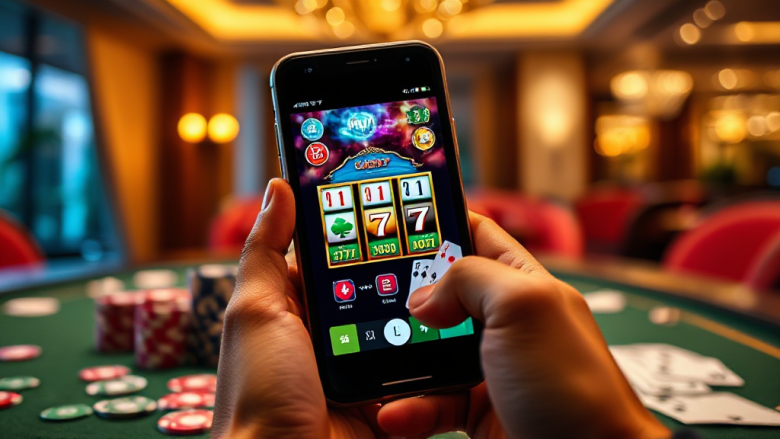
Card Games on CT777: Where Skill Meets Chance
Slots spin and the result is decided the moment you press the button, but card games on ct777 work differently because the decisions you make inside a hand actually shape the outcome. That single distinction changes everything about how a session should be approached, from the size of your first stake to the moment you decide to stop. If you have been treating the card section like an extension of the slot reels, you are leaving both money and enjoyment on the table. This is a closer look at the card games category as its own discipline, written from the perspective of someone who plays cards first and everything else second.
Why Card Games Are Not Slots With a Different Skin
A slot machine is a closed system. You choose a bet size, you press start, and a random number generator decides what happens. There is no decision point between the spin and the result, which means the only variables under your control are stake size and when you walk away. Card games introduce a second layer: the decisions made during play. Whether you draw, stand, fold, raise, or double down is a choice, and that choice interacts with probability in a way that a slot spin never can.
This matters because it changes the emotional texture of a session. Slots are passive. You watch, you react, you wait for variance to swing your way. Cards are active. You are constantly reading a situation, weighing odds, and committing to a line of play. On CT777, the card section rewards that engagement because the games are built around the standard rules players already recognise, so the skill element is not hidden behind unusual mechanics. You are not learning a new game from scratch; you are applying knowledge you may already have.
There is also a practical difference in how bankroll behaves. In slots, a long dry spell is simply bad luck and there is nothing to adjust. In cards, a long dry spell can sometimes be traced to loose decisions, and that means the same bankroll can last longer or shorter depending on how well you play. That feedback loop is the entire appeal of the category, and it is why serious card players tend to keep separate expectations for this section compared to the reels.
The Skill-Adjacent Middle Ground: What You Can and Cannot Control
It is important to be honest about the word “skill” here. Card games on a real-money platform are not chess. You are not outthinking a human opponent in most cases, and the house still holds an edge over time. The correct way to think about it is skill-adjacent: your decisions reduce the size of the house edge rather than eliminating it. A player who understands basic strategy in a card game will lose more slowly than a player who guesses, and over many sessions that difference compounds.
What you can control includes stake sizing, game selection, and the discipline to stop when a session turns cold. What you cannot control is the shuffle, the draw, or the run of cards. Confusing these two categories is where most players get into trouble. They attribute a bad run to their own play and start chasing, or they attribute a good run to skill and start overbetting. Both mistakes come from the same root: not separating variance from decision quality.
The practical takeaway is that card games reward preparation more than slots do. Knowing the rules deeply, understanding which hands are worth continuing with, and recognising when a table or variant does not suit your style are all genuine edges. None of them guarantee a win on any given night, but they change the shape of your results over time. That is the honest version of the skill argument, and it is the version worth building a session around.
If you are new to the platform and want to see how the card section sits alongside the rest of the offering, the main ct777 page lays out the categories clearly enough that you can compare them before committing any real balance.
Session Pacing: The Discipline That Separates Good Card Nights From Bad Ones
Pacing is the most underrated skill in card play, and it is the one most players ignore because it feels less exciting than the decisions inside a hand. A well-paced session has three phases. The opening phase is about warming up: smaller stakes, a clear sense of which variant you are playing, and no pressure to win anything back. The middle phase is where you play your normal game, at your normal stake, with your normal decision rules. The closing phase is where you stop, and the stopping is planned before the session begins rather than decided in the moment.
The reason planning the stop matters is that card games create a specific kind of momentum. Winning hands make you feel sharp, and feeling sharp makes you want to keep playing. Losing hands make you feel owed, and feeling owed makes you want to recover. Both emotions push toward extending a session past the point where you are making clear decisions. Setting a stop condition in advance removes that decision from the heat of the moment, which is exactly where it is hardest to make well.
Stake sizing deserves the same treatment. A common mistake is to treat card games like slots and use a flat stake regardless of the situation. In cards, a stake that is too large relative to your balance forces you to play scared, folding hands you should continue with because you cannot afford the next decision. A stake that is too small makes the session feel pointless. The useful range is one where a normal loss does not change how you play the next hand, and a normal win does not tempt you to double up out of excitement.
Session length also interacts with attention. Card games demand more focus than slots, and focus degrades. A two-hour card session where you are sharp throughout is worth more than a five-hour session where the last three hours are autopilot. Recognising the point where your decisions start getting sloppy is a skill in itself, and it is one that improves with practice.
Choosing Your Card Game and Reading the Platform Honestly
Not all card games are equal in how much decision-making they involve. Some variants are almost pure chance with a thin layer of choice, while others give you meaningful control over multiple decision points per hand. Before you settle into a favourite, it is worth playing a few rounds of each variant at low stakes just to feel where the decisions actually live. A game that looks strategic on the surface may turn out to be mostly automatic, and a game that looks simple may have more depth than expected.
Platform presentation matters too. Clear rules, visible limits, and a layout that does not rush you are all things that support better decisions. CT777 keeps the card section within a single mobile app, which is convenient for players in Pakistan who prefer to play on a phone, but it also means the interface is doing a lot of work. If a game feels cramped or the information you need is not visible at a glance, that is a real cost to your decision quality, and it is fair to factor that into which games you return to.
It is also worth being clear-eyed about what the platform is. This is a real-money gaming product, not a practice app, and the card games carry the same financial weight as anything else in the catalogue. The skill-adjacent nature of the category does not make it a reliable income source. It makes it a category where better players lose more slowly and enjoy the process more. That is a meaningful difference, but it is not the same as an edge that beats the house over the long run.
Players who approach it that way tend to get more out of it. They treat the card section as a place to apply knowledge, pace themselves, and stop on their own terms, rather than a place to chase a result. That mindset is not glamorous, but it is the one that holds up across many sessions instead of just one good night.
A Closing Note for the Card-First Player
If you came to CT777 looking for slots, the card section will feel slower and more deliberate, and that is the point. If you came for cards, you already know that the interesting part of the game is not the result of the shuffle but the quality of the decisions around it. The skill-versus-chance line is real, and it sits exactly where you would expect: on the side of stake sizing, game selection, and the discipline to stop. Everything on the other side of that line is variance, and no amount of good play removes it.
The practical version of this is simple. Pick a card variant you understand, stake it at a level where a normal loss does not change your behaviour, plan your stop before you start, and treat the session as a test of your own discipline rather than a test of luck. Do that consistently and the card section becomes what it should be: the most engaging part of the platform, and the one where your own choices actually matter.